

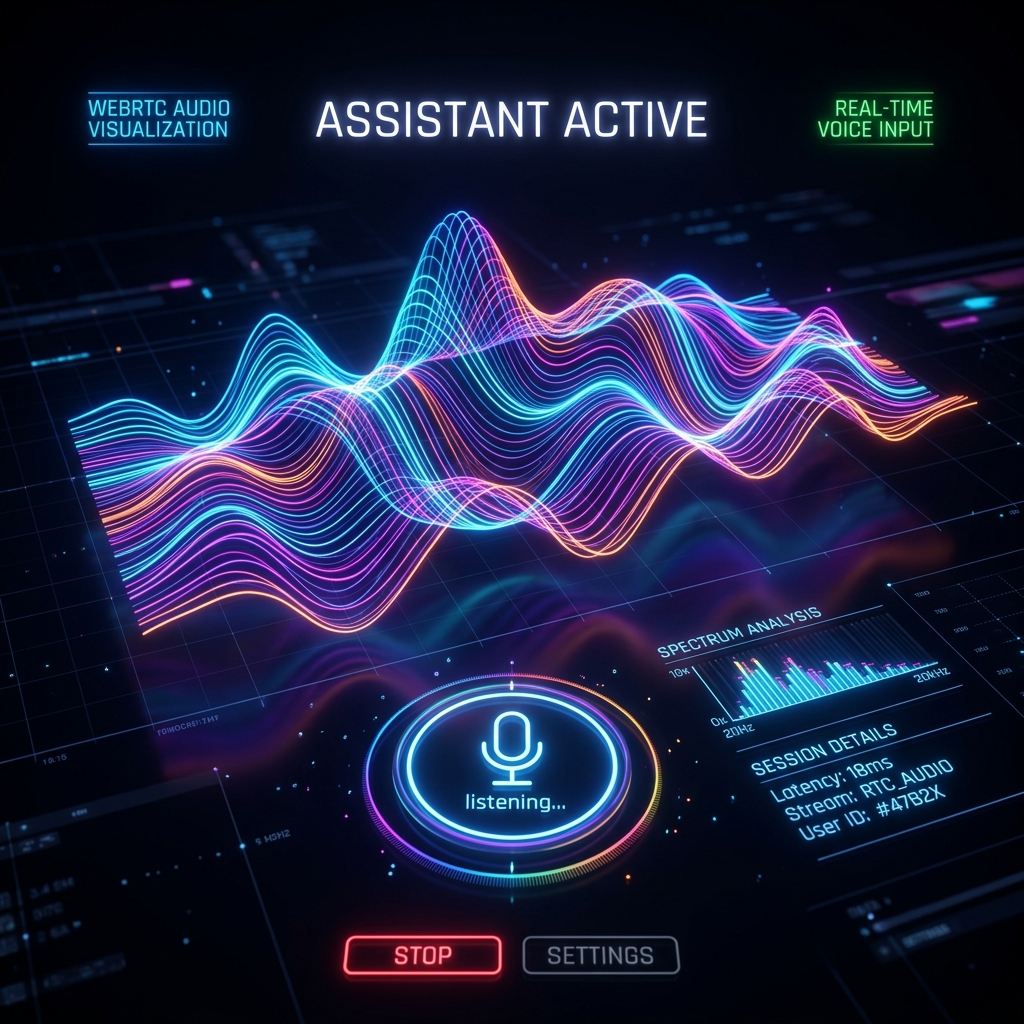
Natural conversation lives and dies on latency. When a voice agent delays longer than a human would, callers hesitate, interrupt, or hang up. Achieving sub-500ms round-trip latency across speech-to-text, reasoning, and text-to-speech is the single hardest engineering constraint in production voice agent development.
The Latency Stack: Where Milliseconds Are Lost
A complete conversational voice agent response loop involves four distinct processing stages, each introducing latency:
- Voice Activity Detection (VAD): Detecting when the human caller has finished speaking (adds 20-80ms).
- Speech-to-Text (STT): Transcribing the streaming audio into text (adds 100-300ms).
- LLM Inference: Generating the appropriate text response (adds 150-400ms).
- Text-to-Speech (TTS): Synthesizing the generated text back into natural audio (adds 80-200ms).
A naive implementation results in an end-to-end delay of 1.2 to 2 seconds, which feels robotic and frustrating. Reaching human-grade responsiveness requires optimizing each layer simultaneously.
Streaming Architectures via WebRTC
Rather than relying on slow HTTP polling, modern voice agents utilize WebRTC (Web Real-Time Communication) to establish a persistent, bidirectional audio stream between the user and the agent. This protocol reduces network overhead and ensures that packets are delivered with minimal transmission jitter.
Word-by-Word Transcription & Processing
Waiting for a caller to finish a complete paragraph before transcribing it adds massive delays. Production voice agents use streaming STT engines that output transcription word-by-word in real time. The reasoning engine begins digesting the start of the sentence while the caller is still speaking, gaining a vital head start.
Real-Time TTS Synthesizers
Just as transcription must be streamed, text-to-speech conversion must begin as soon as the first word of the response is generated. By using chunked TTS generation, the agent starts speaking its first word within 100ms of the LLM initiating its output, continuing to stream the rest of the sentence seamlessly as it generates.
Acoustic Consistency and Brand Voice
A human-grade voice agent does not just sound fast—it sounds natural. Utilizing custom-cloned, high-fidelity neural voices with realistic breathing pauses and verbal fillers (like “uh-huh” or “got it”) ensures high customer trust, translating to higher booking rates and customer satisfaction.
Want to upgrade your customer hotline with a human-grade voice agent? Get in touch with our engineering team to audit your current voice infrastructure and eliminate latency bottlenecks.